
IIn the USA, October 31st is Halloween – a big event, especially for children. In recent years, the Halloween frenzy has spread to other corners of the world, including Italy! You see pictures of Jack o’ Lanterns here and there, kids dress up in spooky costumes and roam the streets, people go to wild parties, etc. , aping more or less what they have seen in movies –unaware of what is behind this ancient Celtic tradition. It’s as if they were acting in a horror movie for an evening, the evening of October 31st.
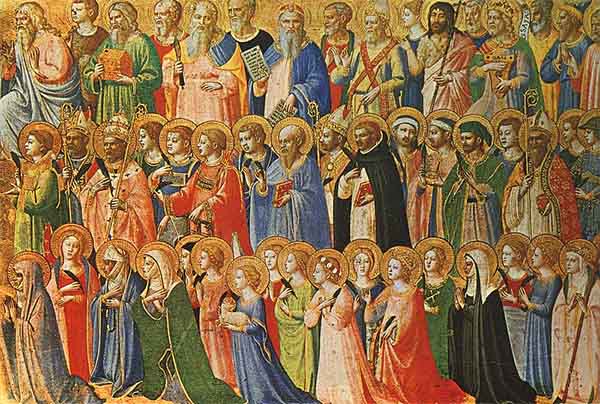
They have no idea that the word Halloween or All Hallows’ Eve actually refers to the eve (e’en) of All Saints’ Day, formerly also known as All Hallows’ Eve -“hallow” being the old word for “holy”. Indeed, if October 31st is the eve of All Saints’ Day, then November 1st is All Saints’ Day, which is certainly a day never forgotten in Italy and an official public holiday . It is called Ognissanti or Festa di tutti i Santi. In Catholic theology, this day commemorates all those who have attained the beatific vision in Heaven. It originated from the belief that there is a powerful link between those who are in Heaven and the living on Earth. Since the 4th century AD there have been commemorations of saints and martyrs, at first individual saints and since the 7th century the feast of dedicatio Sanctae Mariae ad Martyres hasbeen celebrated by the Church of Rome to commemorate all saints in general. But it was in the 8th century that churches in the British Isles began celebrating All Saints on November 1st to coincide with the Celtic tradition in Ireland and Scotland known as Samhain –the festival of the dead, according to some, while others maintain that it was a harvest festival. By the 12th century, November 1st had been set as the date for All Saints’ Day and that has not changed. In Italy, it is mainly an occasion for liturgical celebrations although it has lost much of its spiritual and religious meaning.
So, why is it still a date to be remembered in today’s Italy? Well, as the saying goes “Italiani – popolo di santi, poeti e navigatori” (Italians – a people of saints, poets and navigators). Traditional Italian calendars tell you exactly what saint is remembered on what day. For example, on the 4th of October Italians celebrate San Francesco d’Assisi (St. Francis of Assisi). On this day, people remember to wish all their relatives, friends and colleagues who bear this given name “Buon onomastico!” ( Happy name day!) This is of some importance and wishes are greatly appreciated, especially in the South of Italy where it is sometimes more significant than a person’s birthday, especially among the older generation. Nowadays, even though some children have names that obviously come from English or American TV series or movies such as Kevin or Denise, most kids are still given saints’ names also because they are named after their grandparents who were named after saints.
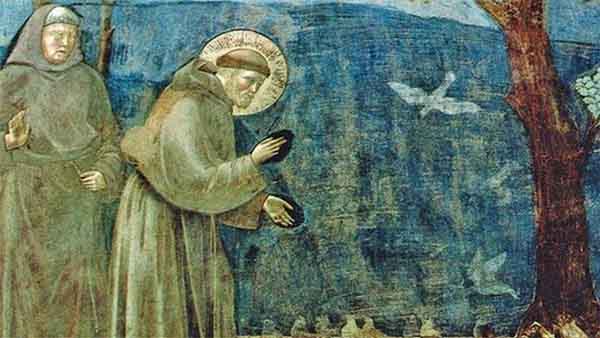
On a wider scale, not only individuals, but also cities and regions are associated with certain saints. For example, the patron saint of Italy is St. Francis of Assisi. Then, Rome has St. Peter (San Pietro) and St. Paul (San Paolo) plus a few more saints protecting the capital of Italy. St. Ambrose (Sant’Ambrogio) is the protector of Milan while St. Marcus (San Marco) of Venice. Palermo has St. Rosalia or La Santuzza (the little saint), St. Agatha and St. Francis of Paola watching over the city and Naples has St. Januarius (San Gennaro) and no less than 52 more patron saints to take care of this important job !
Italians –even those who are not very religious –are fond of their saints, especially their local patron saints, as if they were part of their extended family, someone trusted to whom many turn with prayers and special requests. Therefore, every town has a Patron Saint’s Day , a festa patronale –a true folk festival that citizens look forward to and take part in. Something that distinguishes them from other towns, something they take pride in and want to show off. You may want to check out online, among others, Festa della Bruna in Matera (Basilicata), Festa di Sant’Agata in Catania (Sicily) , Festa di Santa Rosa in Viterbo (Lazio) . Absolutely dazzling !
Sylvia Stastny-Terrone