
When people begin researching their Italian roots, they usually start with names and dates.
But to truly understand an ancestor’s story — and to reconstruct a reliable family history — it is often just as important to know how they lived and what they did for a living.
In Italy, professions and everyday life are not background details. They are powerful genealogical clues.
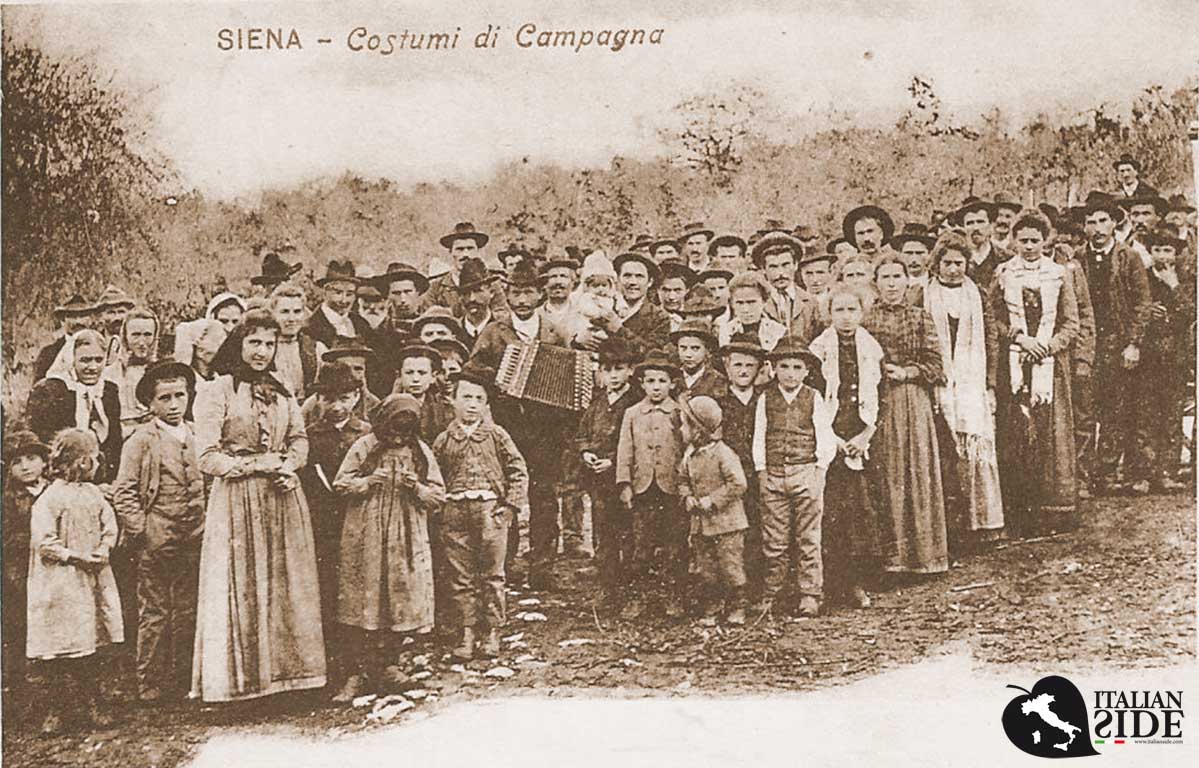
Rural Italian community, early 20th century
(countryside near Siena)
Why Professions Matter in Italian Genealogy
For centuries, Italian society was deeply local and structured around work.
A person’s profession often determined:
- where they lived
- which records were created
- how frequently they moved
- and, in many cases, why they emigrated
Understanding an ancestor’s occupation helps genealogists narrow down locations, identify the right archives, and interpret historical documents correctly.
Farmers and Rural Life
Until the early 20th century, the majority of Italians worked in agriculture.
Farmers, sharecroppers, and day laborers usually lived:
- in small rural communities
- close to the land they worked
- within tight family networks
From a genealogical perspective, this means:
- records are often concentrated in one municipality or parish
- land, census, and tax records can provide additional information
- emigration often followed periods of economic hardship or land scarcity
Knowing that an ancestor was a farmer can help explain why entire families left together and why migration followed specific routes.

Pastoral life in rural Italy, early 20th century.
Craftsmen and Artisans
Italy has a long tradition of skilled craftsmanship.
Shoemakers, tailors, blacksmiths, carpenters, and other artisans were essential figures in their communities.
For genealogical research, craftsmen often leave richer paper trails:
- guild or professional records
- mentions in municipal documents
- business-related references in civil acts
These professions can also help identify urban vs rural origins, as artisans were more commonly found in towns and small cities.

Traditional shoemaker at work, Italy, early 1900s
Laborers and Seasonal Workers
Not all work was stable or local.
Many Italians were seasonal or migrant workers, moving temporarily for:
- construction
- harvests
- infrastructure projects
This mobility is important to consider when records appear inconsistent or when ancestors seem to “disappear” for periods of time.
Understanding this pattern helps genealogists avoid false assumptions and follow realistic migration paths.

Collective rural labor in early 20th-century Italy, where work involved entire families and communities.
Everyday Life and Family Structure
Professions shaped daily routines, social roles, and family organization.
Work influenced:
- marriage age
- number of children
- living arrangements
- community relationships
When genealogists study everyday life alongside documents, family histories become clearer and more accurate — not just lists of names, but real human stories.
How Professions Guide Research in Italy
In professional genealogy, occupations are used to:
- identify the most relevant archives
- understand why certain records exist (or do not)
- interpret handwritten documents correctly
- connect people to specific places and communities
This is especially important in Italy, where records are local and archival practices vary from town to town.
From Documents to Places
Knowing how an ancestor lived often leads directly to where they lived.
Professions help genealogists:
- locate ancestral homes
- identify neighborhoods or rural areas
- design meaningful roots journeys
This is why genealogy research and roots travel are so closely connected.
Beyond Names and Dates
Genealogy is not only about discovering who your ancestors were.
It is about understanding how they lived, what shaped their choices, and why their story led to migration.
Photographs of everyday life and traditional professions are not just images of the past — they are visual keys to family history.
How Italianside Works
At Italianside, genealogy research is carried out directly in Italy, combining:
- archival research
- historical context
- local expertise
By studying professions, daily life, and territory together, we help families reconstruct accurate and meaningful histories — and, when desired, reconnect with the places their ancestors once called home.
Alongside archival documents, our research also draws on a curated historical photo archive.
These images help us reconstruct the social and cultural context in which families lived — work environments, daily life, and community structures.
Photographs are not used as decoration, but as historical references that support a deeper and more accurate understanding of family histories.
If you want to explore your Italian roots with depth, accuracy, and respect for history, professional research makes the difference.