
Notary documents are one of the most important sources for family history studies available in the Italian State Archives.
These records go beyond the basics, offering insights into the social, economic, and emotional aspects of your ancestors’ lives. By examining these documents, you can uncover stories that paint a vivid picture of who your ancestors were, how they lived, and what they valued.
What Can Notary Documents Reveal?
– Social and Economic status: for example, searching for any qualifications, profession, economic conditions, through the study of the goods that he/her purchased, sold or donated;
– Behavior: Acts related to disputes, settlements, or agreements;
– Emotional Relationships: Testaments, marriage contracts, and donations reveal family bonds and affections.
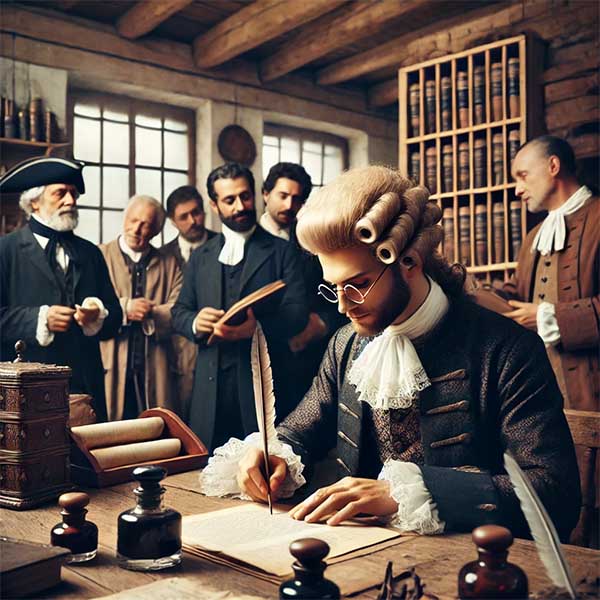
Types of Notary Documents for Genealogy
Notary records are often bound in volumes and include various types of deeds that are rich in genealogical details:
- Testaments : Reveal names, family relationships, economic conditions, and emotional ties, while offering a glimpse into historical customs and property details.
- Inheritance Disputes: Highlight family controversies over property, showing relationships and influences that shaped family decisions.
- Sales and Purchases: Detail property transactions while providing names, family connections, and economic exchanges.
- Permutations: Similar to sales, these document the mutual exchange of goods or property rights, offering genealogical data.
- Donations: Contain details about donors and recipients, often revealing emotional preferences within the family.
- Marriage Contracts: Illustrate family strategies behind marriages, including dowries, and document family names, relationships, and property holdings.
- Special Powers of Attorney: Explain why one person entrusted legal actions to another, often revealing travel, work commitments, or other life circumstances.

For each type of document we will provide a short summary of the typical content and an example.
The Testaments provide a valuable set of genealogical data such as the names and surnames of the individuals concerned, their family relationships, economic conditions and emotional ties, as well as offering an insight into the uses and customs of the time. They also describe movable and immovable property are subject to succession with great accuracy.
The Inheritance disputes highlight the controversies between members belonging to the same family, for reasons regarding the division of property following a testamentary bequest. In addition to family relationships, these types of documents contain several genealogical information such as acquired relationships (spouses), which often influenced the choices of the family members to the dispute.
The Sales and purchases offer detailed descriptions on the goods subject to sale, in addition to providing genealogical data such as name, surname, paternity, name of the spouse and offspring of the sellers, who were transmitting the goods, and the buyers, who promised to pay an amount.
The Permutations, like sales and purchases, provide genealogical data such as name, surname, paternity, name of spouse and offspring of contractors who mutually transferred ownership of goods, or any other property right.
The Donations, in addition to containing genealogical data on the donor of a good and on the recipient, such as name, surname, paternity and family relationships (since very often the donations were made between relatives), can be a proof of the emotional relationships that privileged a part of the family members (or a single member) than others.
The Marriage contracts give a full picture of the family and property strategies which are the basis of marriages, as well as showing genealogical data on the spouses and relatives concerned. The dowry was the fundamental element of marriage contracts since the marriage was seen as an economic relationship that served to the transmission of family names, blood and property, obviously.
A Special Power of Attorney is a legal act through which a person conferred the power to perform legal deeds to another person. In addition to providing genealogical data about the interested parties, it describes the reasons for which a deed was produced, so the reasons that prevented the person concerned from acting personally in his interests, often due to travel or work commitments, or any other kind f impediments.
Why Stop at Names and Dates?
Genealogy is about more than tracing a lineage—it’s about uncovering the stories of your ancestors’ lives!
Through notary documents, you can learn how they lived, loved, worked, and resolved conflicts.
Ready to Dive Deeper?
If you want to explore your Italian family history through these rich archival sources, our local experts are here to help!
Contact us at genealogy@italianside.com and let us guide you on your journey to uncovering the extraordinary lives of your ancestors!